

Perinatal Mental Health
Training for Providers
Strengthen Your Skills Supporting Birthing Families
Maternal mental health impacts 1 in 5 birthing people, yet many providers across healthcare, mental health, and community settings receive limited training on how to recognize and respond to perinatal mental health concerns.
This culturally responsive Perinatal Mental Health Training equips providers with the knowledge, screening tools, and clinical strategies needed to support birthing people during pregnancy and postpartum.
Who This Perinatal Mental Health Training Is For
Perinatal Mental Health Training for the Entire Maternal Care Workforce
Maternal mental health is not the responsibility of one profession alone. Birthing families interact with multiple providers throughout pregnancy and postpartum. Every professional in the perinatal ecosystem plays a role in recognizing mental health concerns and supporting early intervention.
This training prepares providers across disciplines to work with shared language, screening practices, and referral pathways that improve maternal mental health outcomes.
-

Birthworkers
Doulas, lactation consultants, midwives, childbirth educators, and birth support professionals working closely with families during pregnancy and postpartum.
-

Mental Health Clinicians
LCSWs, LMFTs, psychologists, psychiatrists, and licensed or associate mental health professionals providing therapy and mental health care.
-

Medical Providers
OB/GYNs, nurses, pediatricians, midwives, nurse practitioners, physician assistants, and primary care providers supporting maternal health.
-

Community & Social Service Providers
Home visitors, case managers, public health professionals, early childhood specialists, and community health workers supporting families in community settings.

Is This Training Right for You?
This training is designed for professionals who support pregnant and postpartum individuals and want to strengthen their ability to recognize and respond to maternal mental health concerns. If your work places you in contact with birthing families, this training provides practical tools, screening strategies, and culturally responsive approaches that can be applied directly in your care setting.
You Work Directly with Birthing Families
You work directly with pregnant or postpartum individuals across clinical, medical, or community settings.
You Want to Recognize PMADs Earlier
You want to strengthen your ability to recognize perinatal mood and anxiety disorders before symptoms escalate.
You're Seeking CEUs Toward PSI PMH-C
You are seeking continuing education units toward PSI PMH-C certification or recertification requirements.
You Need Practical Screening and Referral Tools
You want practical tools for screening, referral, and interdisciplinary collaboration you can apply immediately in your work.
You Serve Diverse and Underserved Populations
You serve diverse populations and want to deepen culturally responsive care practices especially for Black birthing families.
You Will Benefit from This Training If:
The Training Gap
The Perinatal Mental Health Skills Many Providers Never Learned
-
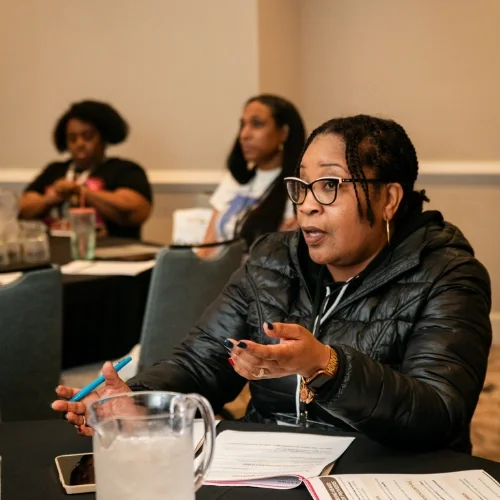
Many providers are familiar with postpartum depression, but fewer receive training on the broader range like anxiety, OCD symptoms, trauma responses, and intrusive thoughts.
-
Perinatal mental health screening often happens inconsistently across medical, mental health, and community settings.
-
Providers learn how systemic racism, stigma, and historical trauma shape how Black birthing individuals experience and express mental health distress.
-
Participants learn strategies for creating safe conversations that encourage honest disclosure.
-
Providers strengthen collaboration between clinicians, medical providers, birth workers, and community programs.
-
When providers understand how maternal mental health concerns appear across different care settings, they can identify symptoms earlier and connect families with appropriate care.
Most clinicians, medical providers, and birth workers receive little formal training in maternal mental health during their professional education. Graduate programs often focus on general mental health, medical care, or childbirth support but rarely address the unique emotional, cultural, and systemic factors that shape the perinatal period.
As a result, many providers enter maternal health settings without the specialized tools needed to recognize and respond to perinatal mental health concerns.
This training helps close that gap.
The Urgent Need
Black Birthing People Are Being Failed by the System
Black birthing individuals face significant disparities in both maternal health outcomes and access to mental health care driven by systemic racism, bias in healthcare systems, and barriers to treatment. These are not gaps that resolve on their own. They require trained providers.

Maternal mental health conditions affect 1 in 5 birthing people, yet more than 600,000 mothers in the United States experience these disorders each year, and up to 75% never receive treatment due to lack of screening, stigma, or barriers to care. Mental health conditions, including suicide, substance use, and untreated depression, are among the leading causes of pregnancy-related death in the United States, and the gap in trained providers makes this worse.
“Mental health conditions like suicide, substance use, and untreated depression are among the leading causes of pregnancy-related death in the United States. Black women carry this burden disproportionately.”
What Providers Learn in This Perinatal Mental Health Training
Practical Skills You Can Apply Immediately
-

Recognize Early Warning Signs
Identify perinatal mood and anxiety disorders before symptoms escalate.
-

Strengthen Screening and Assessment
Use validated screening tools and interpret results effectively.
-

Deliver Culturally Responsive Care
Understand how systemic racism, bias, and historical trauma influence maternal mental health experiences.
-

Improve Care Coordination
Build effective referral pathways between clinicians, medical providers, and community programs.
-

Support Families with Confidence
Provide informed, compassionate support during one of the most vulnerable seasons of a family's life.
-

Navigate Difficult Conversations
Open conversations about mental health concerns in ways that reduce shame, encourage honest disclosure, and keep families engaged in care.
What This Training Covers
From screening follow-up to building referral pathways across entire care teams, this training is built to close the gaps that put Black birthing families at risk.
-
A positive screen is not the finish line. It is the starting point. Yet for many providers, that moment of a positive Edinburgh Postnatal Depression Scale score is where confidence drops and uncertainty takes over. What do you say next? How do you keep the patient from shutting down? Who do you call, and how quickly?
This training closes that gap. Providers across every discipline learn a clear, step-by-step follow-up framework for responding to a positive perinatal mental health screen, including how to hold a trauma-informed follow-up conversation, how to assess severity without escalating fear, how to document findings appropriately, and how to connect the birthing person to the right level of care before they leave your setting.
For Black birthing people especially, what happens in the moments after a positive screen matters enormously. Providers learn how to respond in ways that build trust rather than trigger defensiveness, so a positive result becomes an open door rather than a moment that ends the conversation.
-
Midwives, doulas, and lactation consultants spend more uninterrupted time with birthing families than almost any other provider in the perinatal ecosystem. They are often the first to notice when something feels off, and the first person a new mother trusts enough to say it out loud. That position carries real responsibility and real opportunity.
This training is built to meet birth workers exactly where they are. You do not need a clinical license to benefit, and you will not be asked to practice outside your scope. What you will gain is the language, the awareness, and the practical tools to recognize warning signs early, respond with confidence, and make a warm referral that actually gets followed through.
Lactation consultants in particular often encounter postpartum anxiety and depression during feeding consultations, when a mother is vulnerable, sleep-deprived, and sometimes alone. This training prepares you to hold that moment with care and connect her to the support she needs. Your role in the maternal mental health continuum is not a small one. This training helps you step fully into it.
-
Most providers have heard of postpartum depression. Far fewer receive training on the presentations that carry greater clinical urgency: intrusive thoughts, postpartum OCD, postpartum psychosis, and suicidality in the perinatal period. These are not rare. They are undertrained, underrecognized, and as a result, underreported.
Intrusive thoughts are experienced by a significant number of new parents and are frequently misunderstood by both families and providers. Many birthing people never disclose them out of fear of being labeled dangerous or having their child removed. Providers who understand the difference between ego-dystonic intrusive thoughts and genuine intent are positioned to respond in a way that is both clinically accurate and deeply humanizing.
This training addresses postpartum psychosis warning signs, including when a presentation requires emergency psychiatric intervention and how to communicate that need without traumatizing the patient or their family further. It also equips providers with a framework for perinatal safety planning that is affirming, culturally grounded, and built for the realities Black birthing people face in medical settings.
-
Not every perinatal mental health concern requires a specialist. Not every concern can be managed in-house. Knowing the difference is one of the most valuable clinical skills a provider can develop, and one that most professional training programs never formally teach.
This training gives providers a practical decision-making framework organized around four responses: support, refer, co-manage, and escalate. You will learn which presentations can be held within your current scope and setting, which require a hand-off to a perinatal mental health therapist or psychiatrist, which benefit from a collaborative approach between disciplines, and which require urgent or emergency intervention.
For interdisciplinary teams, this shared language transforms how a care team communicates. When a doula, an OB/GYN, and a therapist are all working from the same decision framework, the patient no longer has to repeat her story to each provider or advocate for herself across siloed systems.
-
A referral that does not get followed through is not a referral. It is a missed opportunity that can take months to recover from, if the family ever returns to care at all. For Black birthing people navigating systems that have historically failed them, a dropped referral reinforces exactly the kind of medical mistrust that keeps them from seeking help in the first place.
This training teaches providers how to build referral pathways that actually work: warm handoffs that include a direct introduction, structured communication protocols between disciplines, and follow-up practices that keep families engaged. You will leave with a model for connecting therapy, OB/GYN, pediatric care, and community-based support in a way that feels coordinated and continuous rather than fragmented.
Organizations and hospital systems will find this section especially actionable. The training provides a foundation for building or strengthening internal referral systems, identifying gaps in your current care network, and creating accountability structures that ensure no family slips through after a positive screen or disclosure.
-
Perinatal mental health does not live in one room. It shows up in prenatal appointments, therapy sessions, well-child visits, home visits, and community support groups. Each setting carries its own norms, time constraints, and relationship dynamics, and the way providers apply their skills needs to reflect that.
This training was designed with that reality in mind. OB/GYNs and medical providers learn how to integrate validated screening tools into routine prenatal and postpartum visits without adding significant time to an already full appointment. Mental health clinicians deepen their assessment and treatment skills for perinatal clients. Pediatric providers learn how to recognize maternal mental health concerns during well-child visits, where they often surface unexpectedly, and how to respond in a way that connects the mother to care without stigma. Community providers and home visitors gain tools for supporting families in informal settings where trust is the primary currency.
Across every setting, one principle guides the training: Black birthing people deserve providers who are prepared. This training makes sure you are.
What Providers Are Saying
Heard from Providers Who've Been in the Room
-
★★★★★
"This program helped me better support my community and build partnerships where patients feel truly safe and not judged."
— Nurse -
★★★★★
"Understanding how a birthing parent might experience stress or trauma deepened my clinical awareness in a meaningful way."— Mental Health Professional
-
★★★★★
"Learning about the screenings used for this population gave me practical tools I can implement in my patient interactions."
— Healthcare Provider
Customizable Perinatal Mental Health Training Tracks
Organizations often employ providers across multiple roles in the maternal care ecosystem. Tracks can be delivered individually or combined to train entire maternal care teams together.
-
Perinatal Mental Health Training for Birth Workers
TRACK 1
• Recognize early signs of perinatal mood and anxiety disorders• Support emotional well-being during pregnancy and postpartum
• Navigate trauma-informed care and medical racism in birth settings
• Identify mental health referral pathways
• Integrate emotional support strategies into birth work
-
Perinatal Mental Health Training for Clinicians
TRACK 2
• Assess and treat perinatal depression, anxiety, and trauma• Apply evidence-based therapeutic interventions
• Understand systemic barriers affecting Black maternal mental health
• Deliver culturally responsive therapy for perinatal clients
• Navigate ethical considerations in maternal mental health care
-
Perinatal Mental Health Training for Medical Providers
TRACK 3
• Identify mental health concerns during prenatal and postpartum care• Integrate screening tools into routine medical visits
• Reduce bias and strengthen patient-provider trust
• Support culturally affirming maternal health care
• Build collaborative care pathways with mental health providers
-
Perinatal Mental Health Training for Community Providers
TRACK 4
• Recognize early warning signs of maternal mental health concerns• Support families through home visits and community care
• Apply trauma-informed communication strategies
• Connect families to culturally responsive mental health resources
• Strengthen referral networks across service systems
Maternal Mental Health Experts Leading the Training
Meet the Trainers
-
![Smiling woman with curly hair wearing a yellow blazer and black t-shirt, seated with arms crossed.]()
Breea Wainwright
Licensed Marriage and Family Therapist, IFMHS, PMH-C
A nationally recognized leader in maternal mental health training focused on expanding culturally responsive care for Black women.
-
![A woman with long dark hair, smiling, wearing a blue blazer and black t-shirt with white text, seated with hands clasped in her lap.]()
Dr. Chyna Hill
Licensed Clinical Social Worker, PMH-C, EMDR Certified
Perinatal mental health specialist and educator with expertise in trauma-informed maternal health care and interdisciplinary collaboration across medical and behavioral health systems.
-
![Close-up of a smiling African American woman with braided hair, wearing hoop earrings and layered gold necklaces, dressed in a black blazer.]()
Ebony Staten
Associate Marriage and Family Therapist, APCC, PMH-Trained
Associate Marriage and Family Therapist specializing in therapeutic support for perinatal clients and culturally affirming maternal mental health care.




Building on the Foundation of PSI Perinatal Mental Health Training
Postpartum Support International (PSI) has played a critical role in expanding awareness and education around perinatal mood and anxiety disorders through its PMH-C certification pathway. This program builds on that foundation by focusing on clinical application and culturally responsive care in real practice settings.
Participants deepen their ability to:
apply perinatal mental health knowledge in clinical and community settings
recognize culturally nuanced presentations of PMADs
address systemic barriers impacting Black maternal mental health
implement trauma-informed care across disciplines
strengthen referral pathways between providers
CEUs and Certification
CEUs earned through this training may be applied toward PSI certification or recertification requirements. This training is not a replacement for PSI certification. It focuses on clinical application and culturally responsive care in real practice settings.
Bring Perinatal Mental Health Training to Your Organization
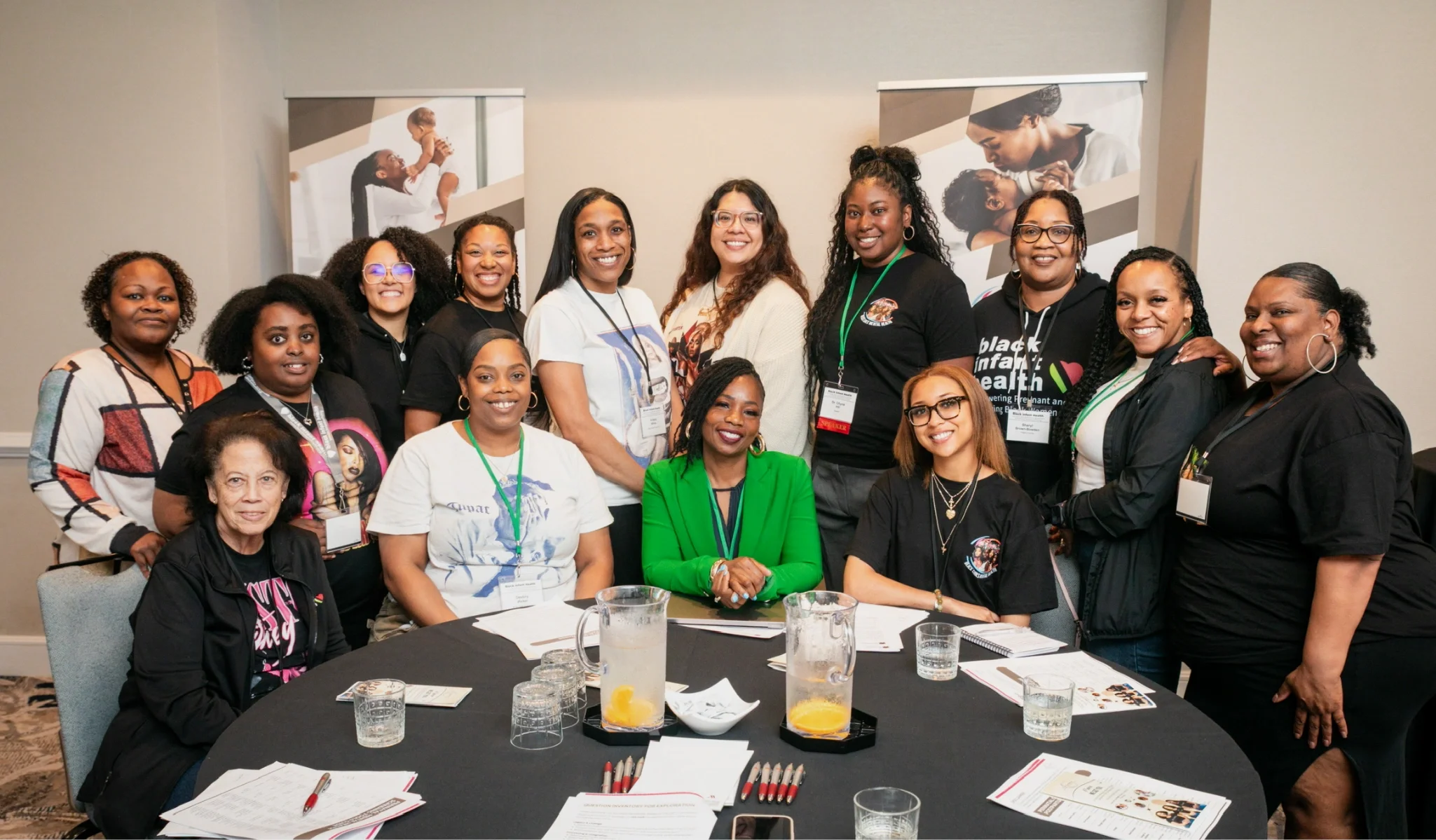
Hospitals, clinics, public health departments, and community organizations can bring this training directly to their teams. Tracks can be combined to train entire maternal care teams together, improving collaboration and referral systems.
For organizational training inquiries: admin@blackgirlsmhc.org
-
Perinatal mental health training prepares providers to recognize and respond to mental health challenges that occur during pregnancy and the postpartum period, including depression, anxiety, trauma, and perinatal mood disorders.
-
This training is designed for clinicians, therapists, doulas, nurses, midwives, social workers, and community professionals who support pregnant or postpartum individuals.
-
Yes. Knowing how to screen is only part of the skill set. This training walks providers through what comes next after a positive screen, including how to have a compassionate follow-up conversation, how to assess severity, and how to connect families to the appropriate level of care. Providers leave with a clear framework for moving from identification to action so that a positive screen becomes a pathway to support rather than a dead end.
-
Yes. This training was built for the full maternal care workforce, not just licensed therapists. Midwives, doulas, lactation consultants, and childbirth educators play a critical role in the perinatal ecosystem, and the training is designed to meet each provider where they are. Content is tailored by role so that birth workers gain practical tools that fit within their scope of practice, including how to recognize early warning signs, how to reduce shame in conversations about mental health, and how to make a warm referral to a mental health provider.
-
No prior specialization is required.
-
No. This training complements PSI certification by focusing on clinical application and culturally responsive care.
-
Yes. CEUs may be applied toward PSI certification or recertification requirements.
-
Yes. Trainings can be delivered virtually or in person for interdisciplinary teams.
-
Yes. The training is delivered virtually so providers across the country can participate.
-
Individual registration is $500 per participant.
-
You can register directly through our scheduling page here to reserve your spot in the next training session.
-
Yes. Providers learn to recognize the full spectrum of perinatal mood and anxiety disorders, including presentations that are often missed or misunderstood. The training addresses intrusive thoughts, the distinction between postpartum anxiety, OCD presentations, and postpartum psychosis, and appropriate safety protocols when a patient is in crisis. Providers leave knowing how to respond with both clinical accuracy and cultural sensitivity so that higher-risk concerns are identified early and handled with care.
-
Yes. One of the most practical skills providers gain in this training is knowing when to stay in their lane and when to escalate. The training gives providers a clear decision-making framework for assessing when a patient can be supported within their current setting and when a referral to a perinatal mental health specialist, psychiatrist, or higher level of care is the right next step. This reduces both under-referral, where concerns go unaddressed, and over-referral, which can break trust with patients who are already navigating barriers to care.
-
Yes. Fragmented care is one of the most significant barriers to maternal mental health treatment. This training specifically addresses how to build referral pathways across disciplines so that a birthing person does not fall through the cracks between their OB/GYN, their therapist, their pediatrician, and the community organizations supporting their family. Providers learn how to communicate across settings, what information to pass along in a referral, and how to strengthen the connections between the care systems their patients rely on.
-
Yes, and this is central to everything we teach. Black birthing people are significantly less likely to disclose mental health symptoms to providers due to a well-founded history of medical mistreatment, cultural stigma around mental health, and the persistent pressure to appear strong. This training helps providers understand how systemic racism and bias show up in clinical encounters, how to build trust with patients who have reason to be cautious, and how to create the conditions for honest disclosure. Culturally responsive care is not a supplemental topic in this training. It is woven throughout every module.
Perinatal Mental Health Training
Frequently Asked Questions
Still have questions?
Our team is happy to talk through anything before you book.

Join the Providers Raising the Standard of
Maternal Mental Health Care
A growing community of clinicians, birth workers, and medical providers are choosing to show up differently for birthing families. This is your invitation to be one of them.
Virtual Training · CEUs Eligible Toward PSI Certification