

Therapy for
Depression in Black Women
Virtual Depression Therapy for Black Women Across California and Georgia
Depression in Black women can be silent, hidden under high achievement, caregiving, and the expectation to push through. It is not always endless tears. Sometimes it is numbness, irritability, or exhaustion you simply cannot shake.
Depression in Black Women:
It Doesn’t Always Look the Same
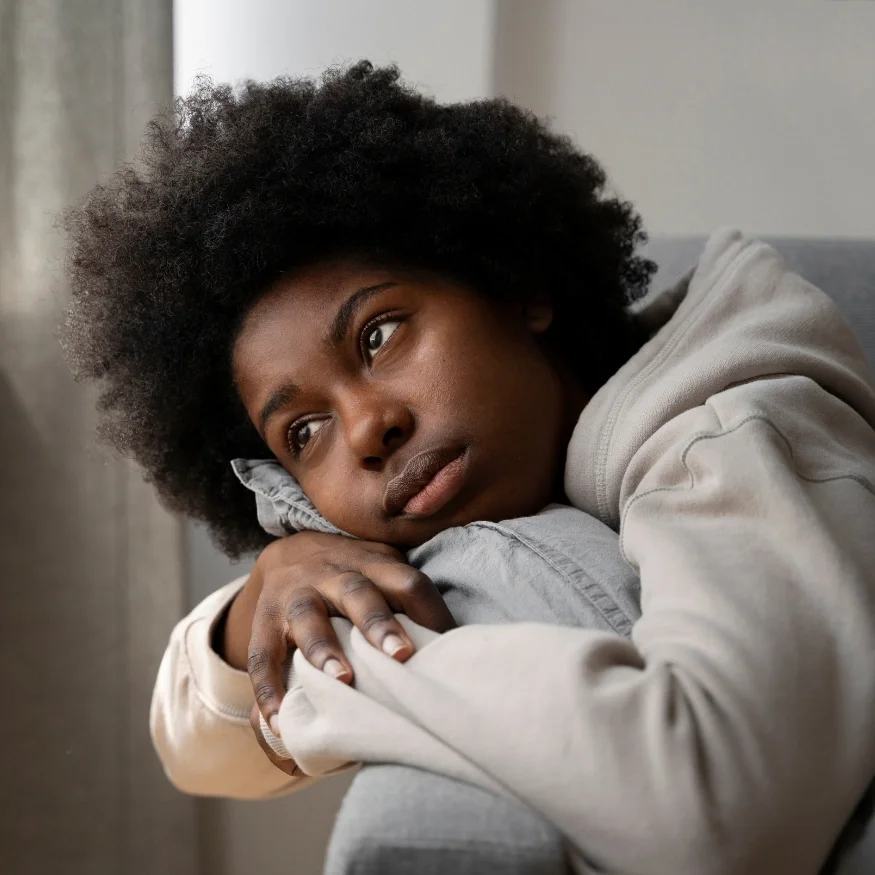
For many Black women, depression does not arrive as obvious sadness or the inability to get out of bed. It arrives as a kind of emptiness that coexists with a full life. A numbness that sits underneath high performance. An exhaustion that rest does not fix, no matter how much of it you get.
Depression in Black women is often shaped by layers that go beyond personal circumstance. Racial stress, the weight of the Strong Black Woman expectation, disproportionate caregiving responsibilities, generational trauma, and the chronic pressure to appear fine in spaces that were never designed to hold you, all of these compound. The nervous system was never built to carry that much, for that long, without real support.
Many Black women have been told their symptoms are "just stress," dismissed by providers who did not understand the full picture, or felt like seeking help was admitting failure. None of that is true. Depression is a real, treatable condition, and you deserve care from someone who already understands the full context of your life before you walk in the door.
"Depression is not a personal failure. For many Black women, it is the natural result of carrying too much for too long without the support you have always deserved."

What Depression Looks Like in Black Women
Persistent Sadness or Emotional Numbness
A flat, empty, or disconnected feeling that lingers for weeks, even when life looks fine from the outside and there is no clear reason to feel this way.
High-Functioning Depression
Continuing to perform, achieve, and show up while feeling completely empty inside. Often mistaken for strength or resilience by everyone around you, including yourself.
Loss of Interest or Pleasure
Losing connection to things, people, and activities that once felt meaningful, enjoyable, or important, without fully understanding why.
Irritability & Anger
Feeling short-tempered, reactive, or easily overwhelmed. In Black women, depression often presents as irritability rather than visible sadness, and is frequently mislabeled as attitude.
Exhaustion That Does Not Respond to Rest
A bone-deep fatigue that sleep does not fix. Feeling drained even after a full night's rest or a weekend of doing nothing, no matter how much you try to recover.
Difficulty Concentrating or Making Decisions
Brain fog, slowed thinking, and difficulty completing tasks that would normally feel manageable, even for someone who is usually highly capable and organized.
Withdrawal & Isolation
Pulling away from family, friends, and social situations. Feeling like a burden or like no one would truly understand what you are going through, even people who care about you.
Postpartum Depression in Black Mothers
Feelings of guilt, emotional numbness, difficulty bonding, or a persistent sense of failing as a mother. Postpartum depression in Black mothers is significantly underdiagnosed and undertreated.
For many Black women, depression does not appear as the media portrays it. It can show up in ways that are overlooked, minimized, or mislabeled. It can be at work, at home, in relationships, and in the body.
Why Black Women Experience Higher Rates of Depression
Depression in Black women is not just about individual circumstances. It is shaped by a set of compounding pressures that most general therapy never addresses.
-
Racial Stress and Chronic Discrimination
Navigating microaggressions, workplace bias, systemic racism, and racial violence keeps the nervous system in a persistent state of activation. Racial discrimination is directly linked to higher rates of depression and depressive episodes in Black women.
-
The Strong Black Woman Expectation
Being socialized to appear strong, self-sufficient, and unbreakable regardless of internal reality makes it harder to recognize depression as a legitimate health condition. Many Black women have been conditioned to see asking for help as failure.
-
Grief, Loss, and Unprocessed Pain
Personal loss, community grief, and the accumulated weight of witnessing harm against Black people all contribute to depressive symptoms that are real and valid. Grief does not always follow a timeline, and it does not always look like sadness.
-
Caregiving and Invisible Labor
Carrying disproportionate responsibility for family, community, and work simultaneously, while rarely having the same support extended in return, creates a chronic emotional and physical depletion that feeds depression.
-
Generational Trauma
Patterns of emotional suppression, hypervigilance, and unprocessed pain can be passed across generations. Many Black women are not just carrying their own depression but the weight of what was never allowed to be felt by those who came before them.
-
Medical Bias and Misdiagnosis
Black women's symptoms are frequently dismissed, minimized, or attributed to attitude rather than recognized as a mental health condition. This leads to delayed diagnoses, undertreated symptoms, and a justified distrust of systems that have historically failed Black patients.
Is Depression Treatable? Absolutely.
With the right support, depression can change significantly, even if you have been living with it for years. Therapy for depression in Black women goes beyond generic coping strategies. It works with the full picture of your life, including the cultural, systemic, and relational factors that shape how depression shows up for you.
This means therapy that does not require you to explain your experience before it can begin. Care that already understands the weight of the Strong Black Woman expectation, racial stress, the cost of chronic caregiving, and why you may have learned to hide how you really feel.
Progress in depression therapy does not mean that life becomes problem-free. It means feeling things again without being overwhelmed by them. Finding moments of genuine rest. Reconnecting with parts of yourself that depression quietly shut down. That is what changes. That is what therapy for depression in Black women in California and Georgia can do. When the support is right, the shift is real.
What Happens in Depression Therapy at BGMHC
You do not need to know the right words or have everything figured out. Here is what working with us actually looks like.
How We Treat Depression at BGMHC
We use proven, evidence-based approaches tailored to the full context of your life. Not generic strategies, but tools that account for who you are, what you are carrying, and where you want to go.
-
Cognitive Behavioral Therapy (CBT)
CBT identifies the thought patterns that deepen depression, including negative self-talk, hopelessness, and the internalized belief that you are not allowed to struggle, and builds practical tools to interrupt and reframe them. Especially effective for persistent low mood, self-worth, and burnout.
-
EMDR Therapy
When depression is rooted in past experiences, including racial trauma, loss, medical trauma, or childhood experiences, EMDR helps the brain reprocess those memories so they stop pulling you under. Relief without having to retell every detail.
-
Interpersonal Therapy (IPT)
IPT addresses how relationships, role changes, grief, and major life transitions contribute to depression. Particularly effective for Black mothers navigating postpartum depression, identity shifts after having children, or relationship dynamics that intensify low mood.
-
Faith-Based Therapy
For Black women whose faith is central to their identity, therapy can thoughtfully incorporate prayer, scripture, and spiritual practice into the healing process. If you have experienced church hurt or carry a complicated relationship with faith, this is also a space to explore that without judgment. Faith integration is always client-led.

Online & In-Person depression Therapy — Accessible and Confidential
Whether you’re in Los Angeles, Long Beach, Concord, Atlanta, or anywhere in California or Georgia, you can choose between secure telehealth sessions and in-person appointments. Both options offer a safe, judgment-free space to heal with a Black woman therapist who sees you.



Therapy for Depression FAQs
-
Depression in Black women often presents in ways that are overlooked or misunderstood. While common symptoms like persistent sadness, fatigue, or loss of interest can occur, many Black women experience depression through:
Irritability or anger
Chronic stress or burnout
Physical symptoms such as headaches, body aches, and sleep disruption
Overworking or high functioning depression
Feelings of isolation despite appearing strong
For many Black women seeking therapy in California or Georgia, depression may be masked by strength, achievement, or caregiving roles. Cultural expectations around being strong or the backbone of the family can make it harder to recognize emotional distress.
For Black mothers, especially those looking for perinatal therapy for Black women or support for postpartum depression in Black mothers, symptoms may include overwhelming guilt, intrusive thoughts, difficulty bonding, or anxiety during pregnancy and postpartum.
At Black Girls Mental Health Collective, we provide culturally responsive therapy for Black women that centers identity, lived experience, and maternal mental health support.
-
Depression is frequently overlooked in Black women due to systemic inequities and cultural stigma. Many women searching for a Black women therapist in California or a culturally responsive therapist in Georgia report that their symptoms were previously minimized.
Contributing factors include:
Cultural stigma around mental health in Black communities
Medical bias and racial disparities in healthcare
Symptoms being labeled as attitude, stress, or behavioral problems
Limited access to Black female therapists who specialize in maternal mental health
Black women are less likely to be properly diagnosed with mood disorders and more likely to have their depression mischaracterized. In perinatal mental health care, postpartum depression in Black mothers is often dismissed as normal new mom stress.
At Black Girls Mental Health Collective, our all Black clinical team specializes in therapy for Black women navigating pregnancy, postpartum, infertility, birth trauma, and major life transitions. We provide affirming, trauma informed, and identity centered mental health care.
-
Yes. Therapy for long-term depression is highly effective, especially when treatment is consistent and culturally responsive.
Evidence-based approaches used in therapy for Black women with depression include:
Perinatal mental health treatment for Black mothers
At BGMHC, we create personalized treatment plans for women seeking virtual therapy for Black women in California or Georgia. During intake, we conduct a comprehensive assessment to understand symptoms, history, and support systems. From there, we develop a collaborative treatment plan that may include weekly or biweekly therapy sessions.
Whether you are experiencing chronic depression, postpartum depression, or high-functioning depression, culturally responsive therapy can support long-term healing.
-
Yes — we accept multiple insurance plans in California and Georgia, including United Healthcare (Optum), Anthem Blue Cross California, Blue Shield of California, Carelon Behavioral Health, Magellan, Blue Cross Blue Shield of Massachusetts, Quest Behavioral Health, Aetna, Horizon BCBS of NJ, Independence BCBS PA, and Cigna. We also offer therapy vouchers for eligible Black women during pregnancy or within one year postpartum.
-
Yes — if you wish, your therapist can incorporate prayer, scripture, or spiritual traditions into your sessions.
-
Currently, our clinicians are licensed to provide virtual therapy for Black women in California and virtual therapy for Black women in Georgia. Due to state licensing regulations, we cannot provide therapy to clients residing outside states where our clinicians are licensed.
At this time:
We offer online therapy for Black women throughout California.
We offer online therapy for Black women in Georgia based on clinician licensure.
If you are searching for a Black female therapist outside California or Georgia, we can provide referrals to culturally responsive providers in your area.
Our mission is to expand access to maternal mental health support and perinatal therapy for Black women nationwide.